What are bookbinding processes?
Bookbinding processes include all operations that transform printed sheets into a finished book. This is the stage where:
- individual sections form the book block,
- the book block is joined and secured,
- the entire publication gains its final shape and durability.
This is the moment when the project begins to become a complete physical product.
Basic production stages
Every book goes through several key processes:
- cutting – preparing sheets for further processing,
- folding – creating book sections,
- sewing or glueing – joining sections into the book block,
- casing-in – the final connection of the book block with the cover.
The selection of methods depends on the binding type and the character of the publication.
Sewing or glueing — what should you choose?
This is one of the key decisions affecting book durability.
Sewing:
- higher durability,
- better opening flexibility,
- used in premium and hardcover bindings.
Glueing:
- more economical,
- faster in production,
- suitable for most commercial publications.
The choice depends on how the book will be used and the level of durability you want to achieve.
Additional bookbinding elements
Beyond the basic processes, the project can be expanded with elements that influence both perception and functionality:
- endpapers – connecting the book block with the cover in hardcover bindings,
- dust jackets – an additional protective and marketing layer,
- bookmarks (ribbons) – a practical functional addition,
- Rounded Book Corners – improving comfort and aesthetics.
These are the details that often define the character of the publication.
Packaging and preparation for distribution
At the end of the process, the book must be prepared for transport and sale. One of the most interesting options is:
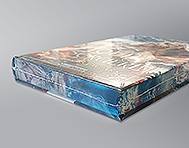
- individual shrink wrapping, protecting the book against dirt and damage.
This is especially important for retail sales and collector’s editions.
What influences production quality?
Book quality depends not only on printing, but also on the precision of the bookbinding processes. The key factors are.
- technology selection (sewing vs glueing),
- accuracy of individual production stages,
- matching processes to the selected paper and binding type.
These are the elements that determine publication durability and user comfort.
What next?
If you already know the binding type and book parameters, it is worth checking the calculator to see how selected solutions influence cost and production. For more complex projects, it is also a good idea to plan the bookbinding process already at the concept stage.